Why Angkor Wat matters
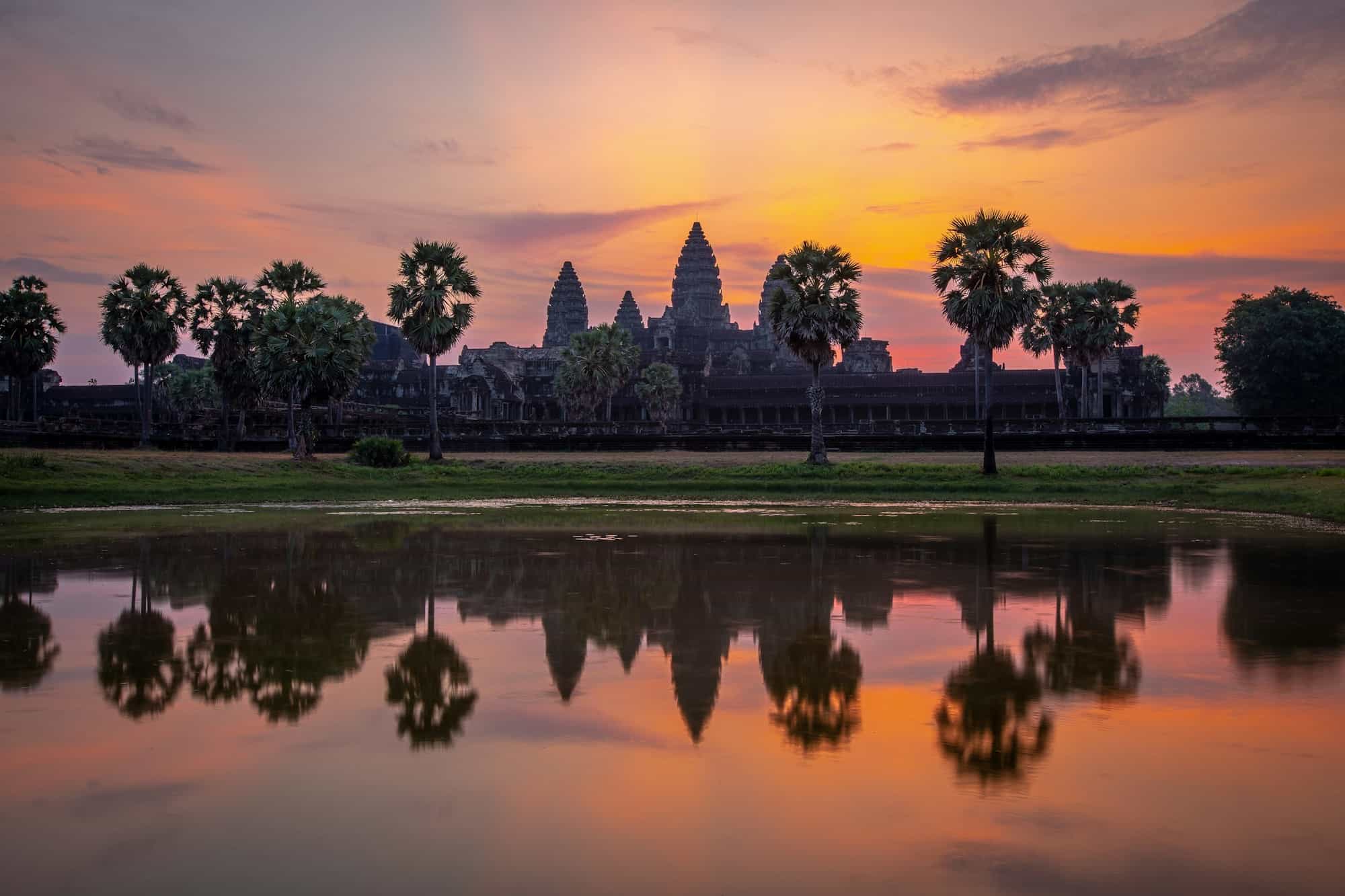
Angkor Wat was built by King Suryavarman II in the first half of the 12th century as his state temple and, most likely, his mausoleum. Unlike most Khmer temples it faces west, the direction associated with Vishnu and with death. That orientation is why the sun rises behind the towers, creating the famous silhouette.
The temple is a model of the Hindu universe. The central tower is Mount Meru, home of the gods, the surrounding galleries are mountain ranges, and the wide moat is the cosmic ocean.
Watching the sunrise
Most visitors crowd the left-hand reflecting pond. It is the classic shot, but it fills up quickly. San arrives early, picks a spot based on the season (the sun rises further left or right through the year), and moves you inside the temple before the big tour groups do.
- Best months for colour: November to March, when skies are clearer
- Rainy season (May–October): fewer people, dramatic clouds, greener surroundings
- Bring a torch or phone light for the walk across the causeway in the dark
The bas-reliefs
The outer gallery has some of the longest continuous stone carvings in the world. San’s favourite stories to explain are:
- The Churning of the Ocean of Milk: gods and demons pull a giant serpent to produce the elixir of immortality.
- The Battle of Kurukshetra: a scene from the Mahabharata epic.
- The Heavens and Hells: 37 heavens and 32 hells, with very creative punishments.
Dress code and rules
To climb to the upper level (Bakan) you must cover your shoulders and knees. Hats come off inside the sanctuary. The upper level closes on certain Buddhist holy days, and children under 12 may not be allowed up.
San’s tip
“After sunrise, most people go back to the hotel for breakfast. That is the best time to see the bas-reliefs. The galleries are almost empty until about 8 o’clock.”